From the first family gathering to the reception, a Gujarati wedding can bring together several occasions with different hosts, venues and guest lists. Explore invitations for the main wedding and its related ceremonies, with Gujarati wording and an individual sample for every event.
Plan the invitation
A wedding invitation suite works best when its cards share a colour palette and typography, while the event names and timings remain unmistakable. A guest invited to the reception should not have to work out whether the wedding ceremony is included. When two families host separate functions, name the relevant hosts on each card rather than copying the entire family list onto every invitation.
Ceremony names and their order vary between families and communities. Ask your family which Gujarati spelling, invocation and programme they actually use before finalising the wording. For a multi-day celebration, put each date beside its event and mention a separate departure time when travel is involved. A compact overview can accompany the detailed cards, but it should never contradict their latest venue or schedule.
Choose the event below to read its meaning, recommended information, Gujarati sample wording and answers to common questions. Each guide includes an original sample card with fictional details, an enlarged preview and a downloadable PNG. Use the sample to discuss the style you want; request a personalised invitation when your names and programme are ready.
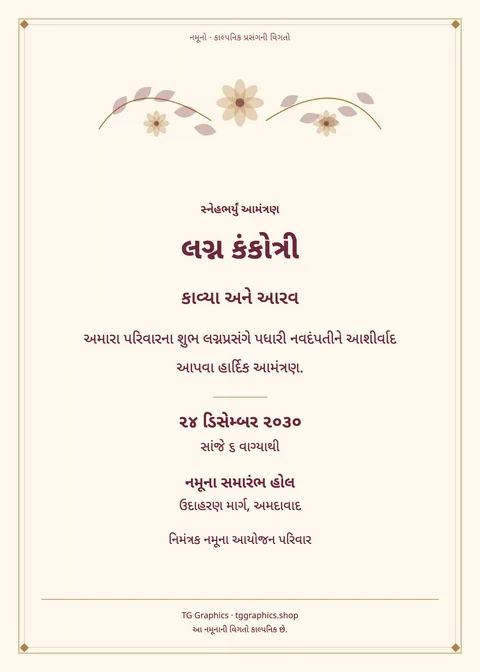
A Lagna Kankotri announces the marriage and invites loved ones to witness the occasion. It usually brings the couple’s names, the hosting families and the wedding schedule into one formal invitation, with an opening chosen by the family.
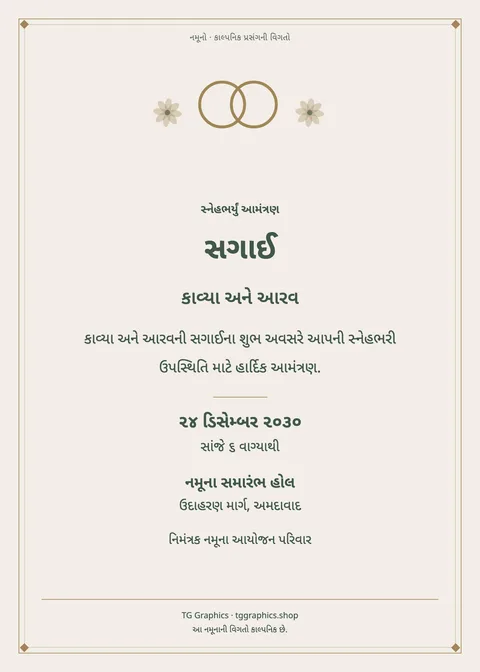
An engagement invitation brings two families together to celebrate the couple’s commitment. Some families describe the occasion as Sagai or a ring ceremony; use the name that matches the actual programme rather than assuming every engagement follows the same ritual.
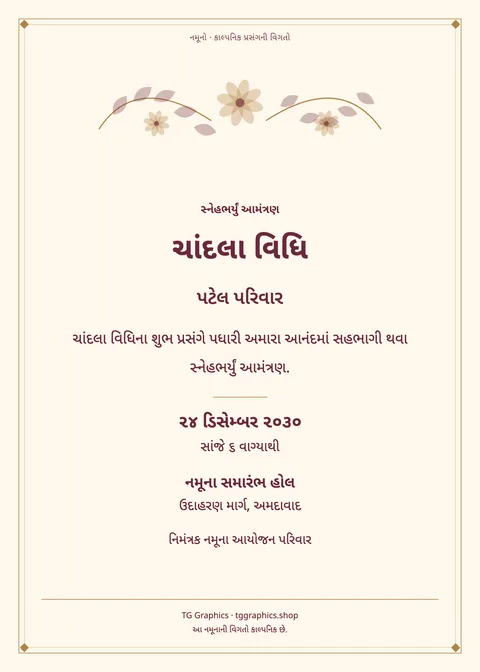
Chandlo Vidhi is a named family ceremony associated with marriage arrangements in some Gujarati traditions. Its meaning and programme depend on the family, so the invitation should use the hosts’ approved name and describe the gathering clearly.
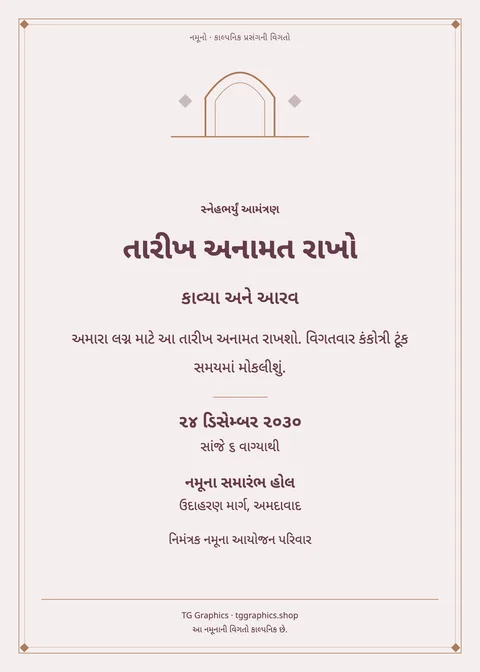
A save-the-date card is an early announcement that helps guests reserve time for a wedding. It is useful when relatives travel from another city, but it is not a substitute for the final invitation with the complete schedule.
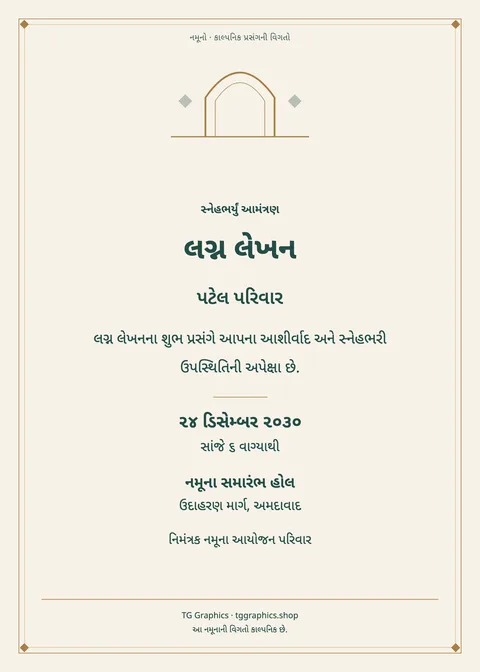
Lagan Lekhan refers to a wedding-related writing ceremony in some Gujarati families. It can be an intimate occasion before the main celebrations. Its invitation should identify this specific gathering rather than look like the principal wedding announcement.
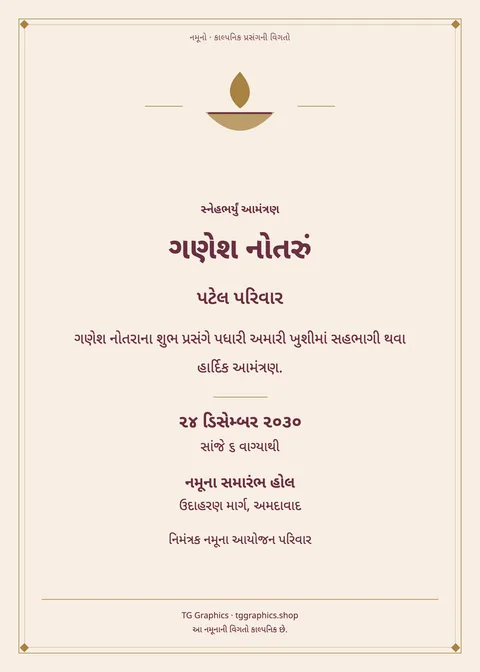
Ganesh Notru is a devotional wedding-related invitation associated with seeking Ganeshji’s blessings. Gujarati card catalogues also use the spelling Notaru. Follow the family’s wording and clarify whether guests are being invited to a separate puja or related gathering.
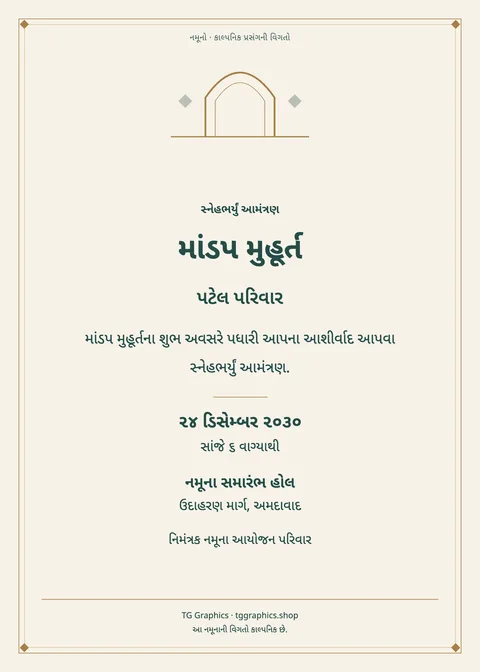
Mandap Muhurat is a named pre-wedding ceremony in Gujarati wedding programmes. It may be listed on the main Kankotri or have a separate invitation when its venue, hosts or guest list differ from the wedding itself.
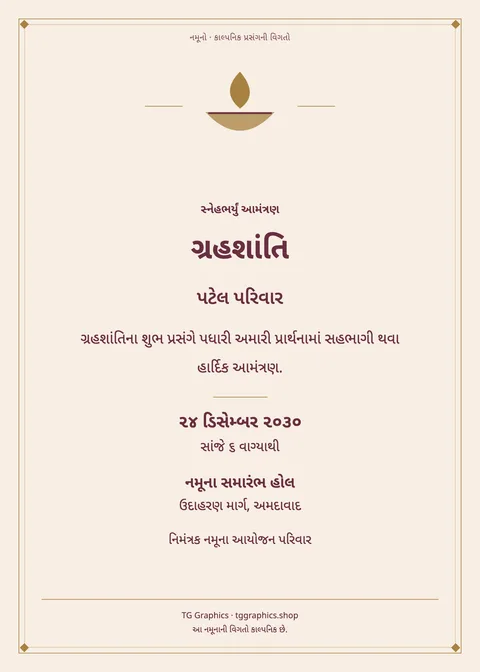
A Grah Shanti invitation announces a family’s planned prayer ceremony, often included among wedding functions. The programme is determined by the hosts and their religious advisers, so the card should explain attendance details without prescribing the ritual.
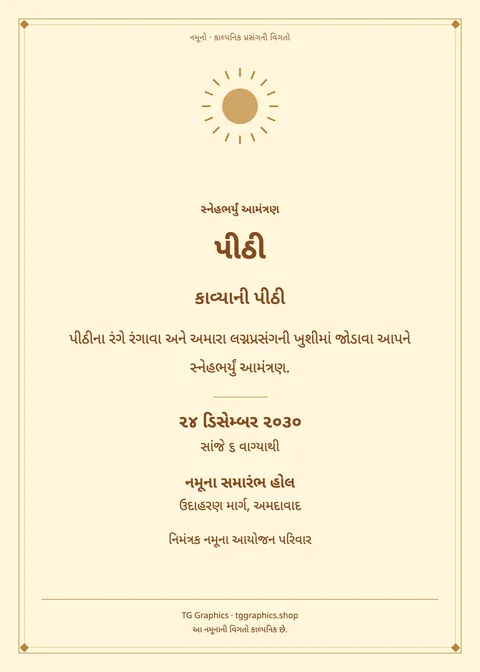
Pithi is the Gujarati name commonly used for a turmeric-related pre-wedding celebration. An invitation can pair the Gujarati heading with Haldi for guests who know that name, while retaining the family’s own programme and tone.
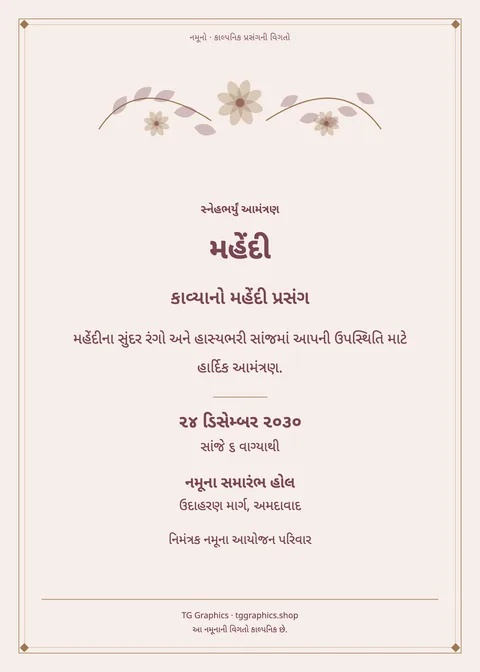
A Mehndi invitation welcomes guests to a henna-themed wedding gathering. The event may be a small family afternoon or a larger celebration with music. Describe the hosts’ actual plan instead of assuming that artists, food and entertainment are included.
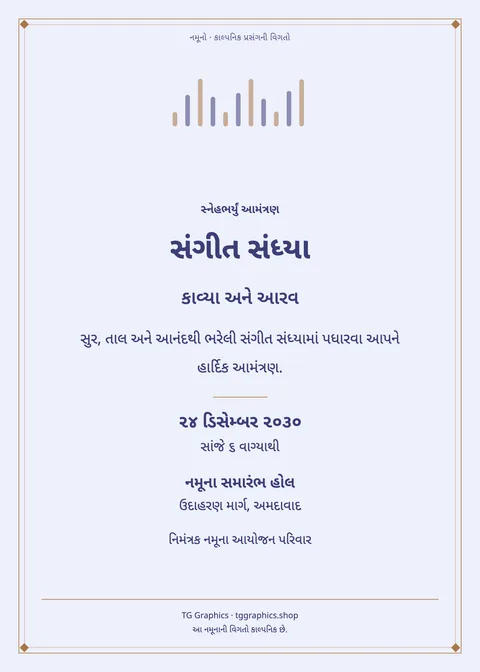
A Sangeet card invites family and friends to a musical wedding celebration. It should make the evening’s purpose and timings easy to understand, particularly when performances, dinner and arrival are scheduled at different times.
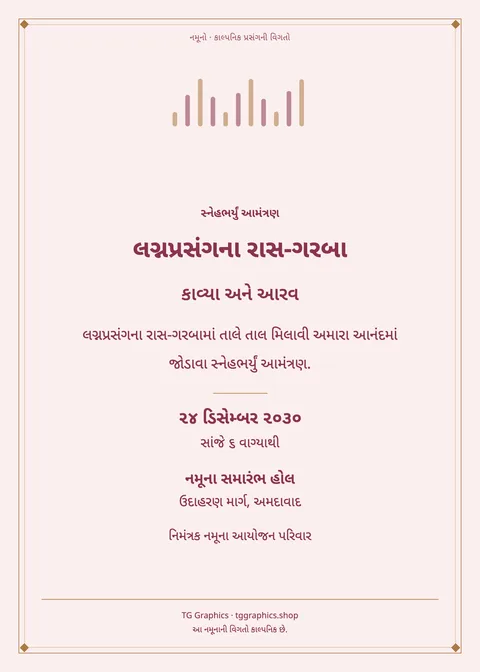
Wedding Raas-Garba is a dance gathering connected to a particular couple’s celebrations. Unlike a Navratri event, its invitation centres on the wedding hosts and guest list, even when the visual language uses familiar Gujarati dance motifs.
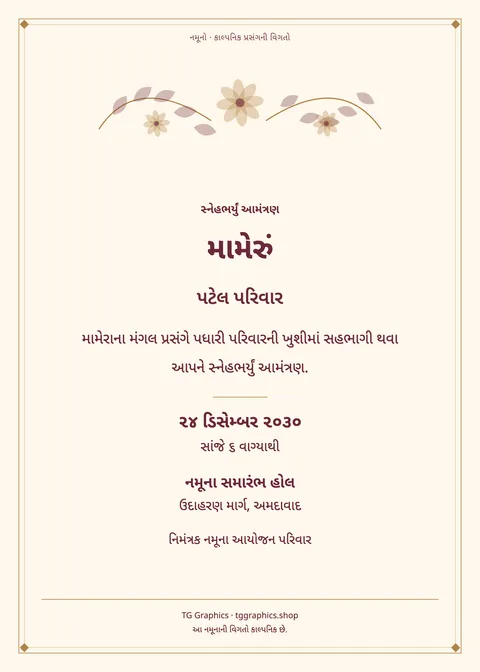
Mameru is a family occasion associated with the maternal side in Gujarati celebrations. The hosts may give it a separate invitation because the attending relatives, timing and venue are different from the main wedding events.
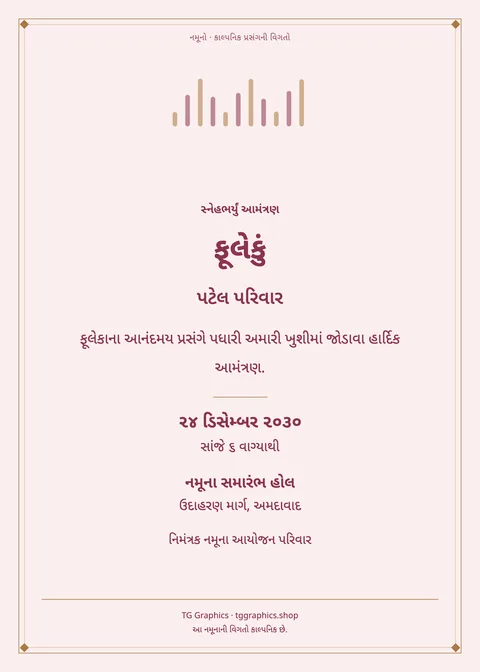
Fuleku appears as a distinct occasion in Gujarati wedding invitation collections. Family customs and the form of the celebration vary, so a useful invitation begins with the hosts’ description rather than assuming one fixed procession or ceremony.
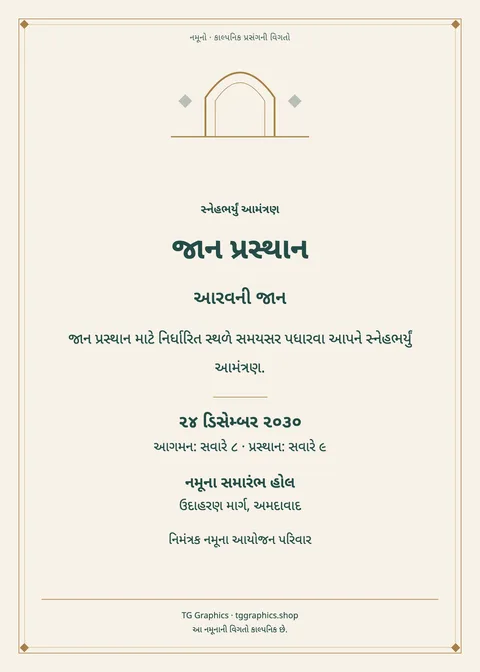
A Jaan Prasthan card gives wedding guests the information they need to assemble before departure. Its primary purpose is coordination: the gathering point, the departure time and the destination should be clearer than the decorative wedding imagery.
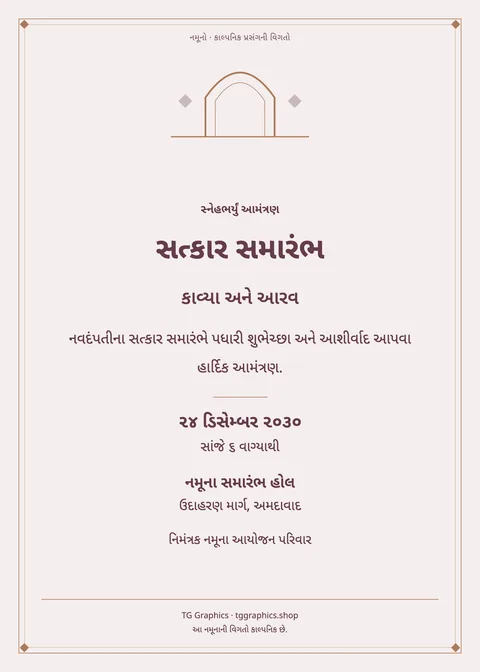
A reception invitation welcomes guests to celebrate and congratulate the newly married couple. It can be independent of the wedding card, especially when the reception has a different venue or includes guests who are not attending the marriage ceremony.
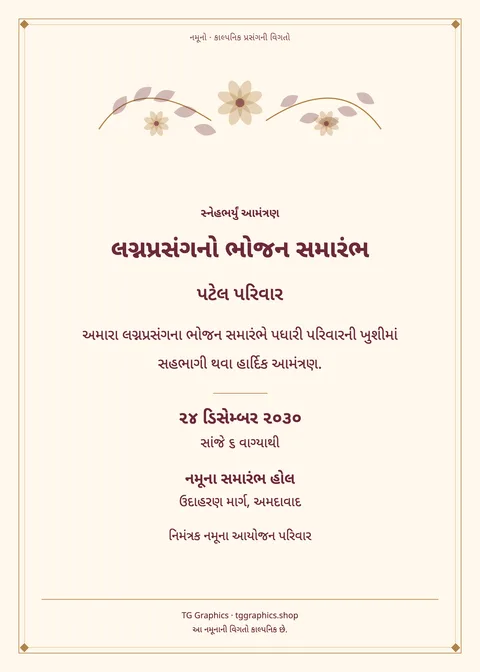
A wedding meal invitation is useful when a family invites guests specifically for the Bhojan Samarambh. It should explain the meal’s connection to the wedding without suggesting that every other ceremony is included in the same invitation.
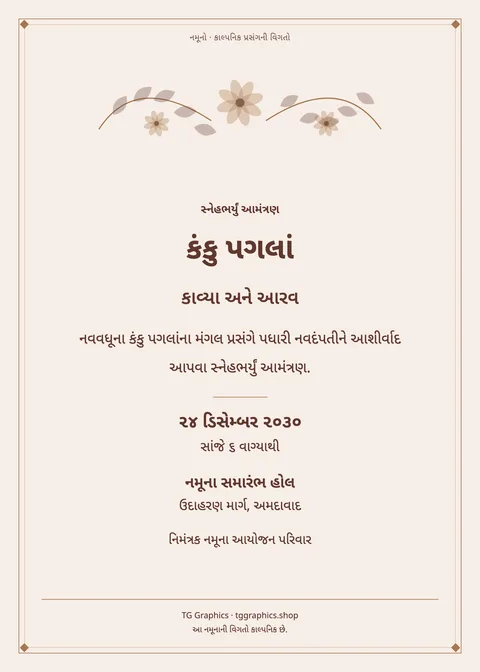
Kanku Pagla is a family welcome occasion associated with a new bride’s arrival in some Gujarati traditions. A separate card can invite relatives to that gathering after the wedding, using wording approved by the hosting household.
Download the sample PNG to inspect the card or share it as an example when discussing your design. Its names, dates and venue are fictional and must be replaced for a real event. For WhatsApp or email, send the final approved image with a short accompanying message containing a checked map link and a contact number. Sending an image as a file can help preserve detail when a messaging service would otherwise compress it.
For printed invitations, agree the physical size, paper and finishing requirements with the printer before the final artwork is prepared. The downloadable sample is a portrait image, not a production print file with bleed or crop marks. Ask for files suited to the actual printing job. Proofread names, dates, the year, AM/PM or Gujarati time wording, and the complete address in the final proof rather than checking only an earlier text draft.