Celebrate a new arrival, a family ceremony or a birthday with a card that gives guests a warm welcome and a clear plan. This collection covers baby showers, naming ceremonies, childhood rites and birthdays, with Gujarati sample wording for each occasion.
Plan the invitation
For a child’s event, let the family decide how much personal information to publish. A first name and host names are often enough for a card shared beyond close relatives. Keep the ceremony and the party distinct if they have different attendance or start times. Guests appreciate knowing whether they are invited for a short ritual, a meal or an afternoon of activities.
Use gentle colours and readable Gujarati lettering rather than filling the whole card with decorative elements. Ask the hosts about practical details such as the planned finish time, a quiet indoor venue and the preferred contact person. Religious customs differ, so include only the programme the family has confirmed. Photographs are optional; a thoughtful typographic card can work just as well without one.
Choose the event below to read its meaning, recommended information, Gujarati sample wording and answers to common questions. Each guide includes an original sample card with fictional details, an enlarged preview and a downloadable PNG. Use the sample to discuss the style you want; request a personalised invitation when your names and programme are ready.
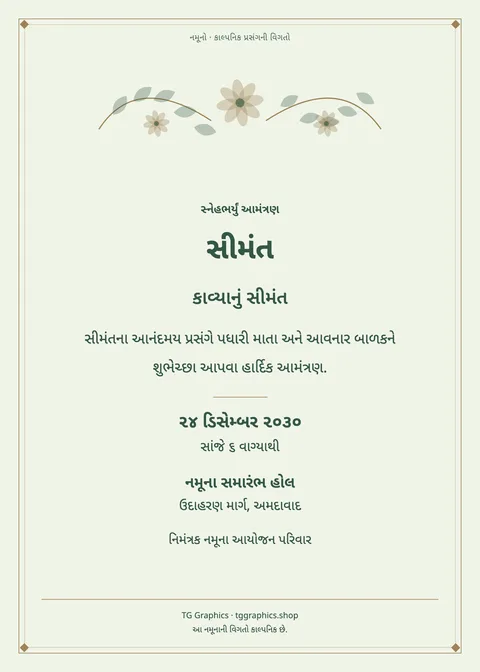
A Simant invitation welcomes family and friends to a celebration for an expectant mother. Families may use related names such as Shrimant or describe it as a baby shower. Use the mother’s preferred name and the ceremony title agreed by the hosts.
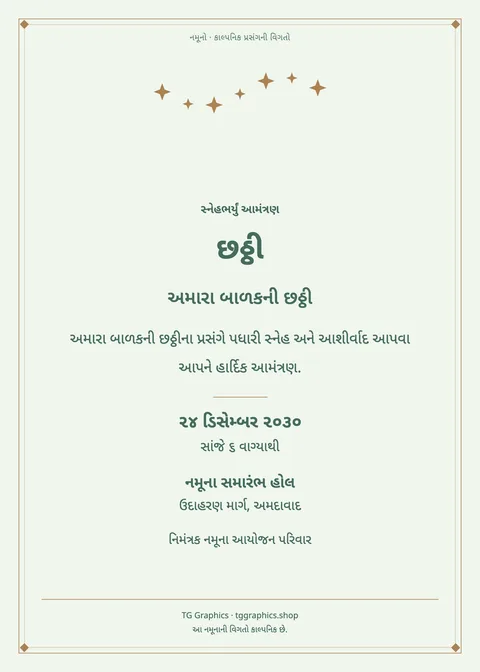
A Chhathi invitation announces the family’s chosen celebration for a newborn. The term is associated with an early-life observance, but the card should use the actual date and programme confirmed by the family rather than calculating it from a sample.
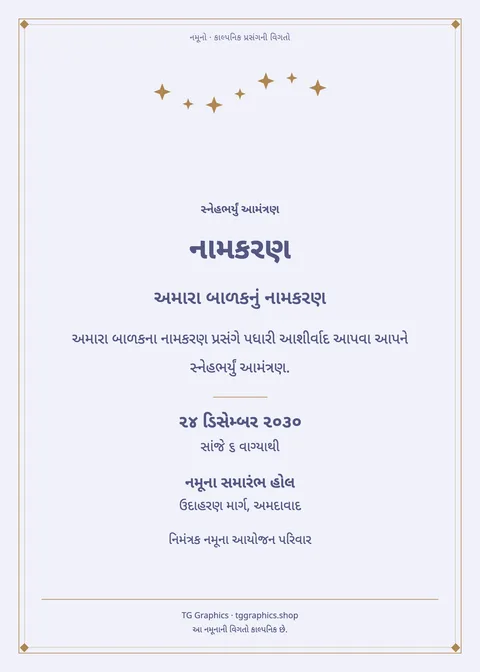
A naming ceremony card invites loved ones to the occasion when the family celebrates a child’s name. The invitation can reveal the name or preserve it for the gathering, depending on the hosts’ preference and the planned announcement.
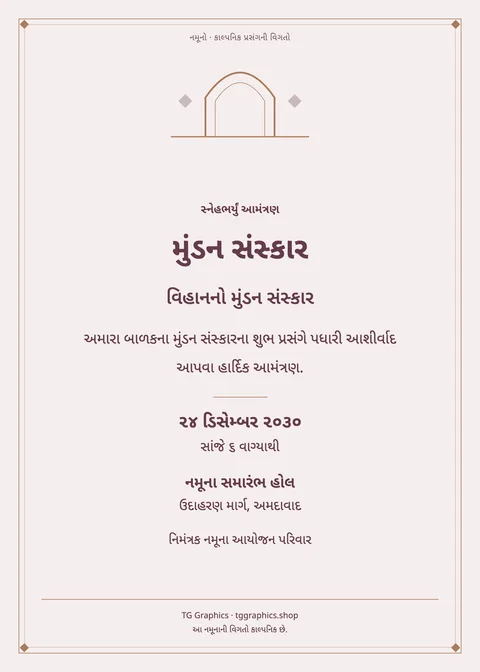
A Mundan invitation announces a child’s first-haircut ceremony where the family observes that tradition. It should identify the child and the planned gathering while leaving ceremonial practices to the family’s chosen religious guidance.
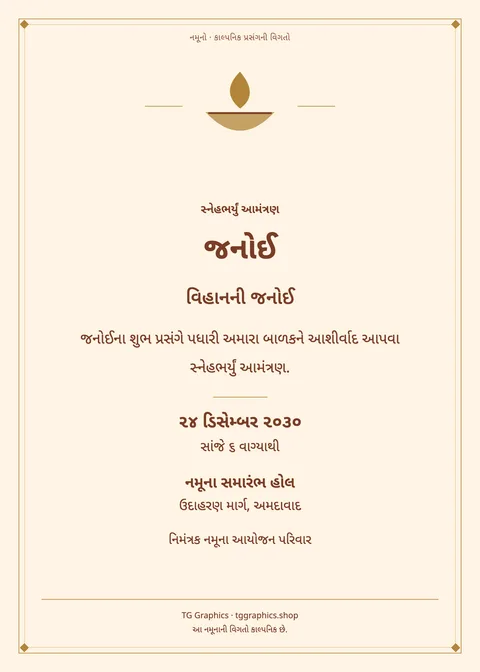
Janoi is the Gujarati name used for the sacred-thread initiation in families that observe it. The invitation should identify the child or participant and the confirmed programme, with the family’s preferred terminology and respectful ceremonial tone.
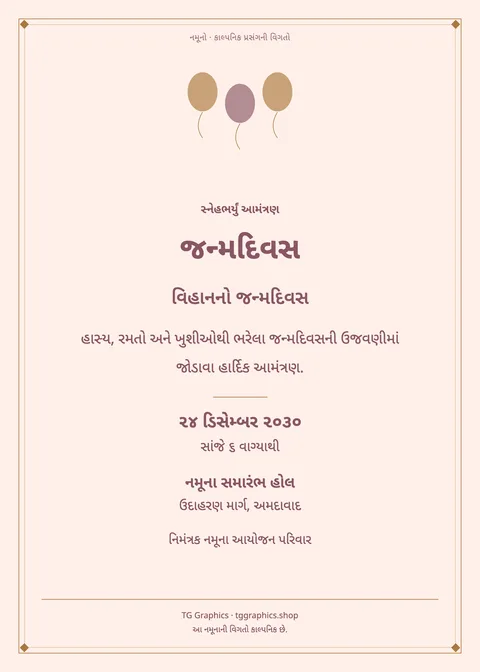
A birthday invitation tells guests whose birthday is being celebrated and what kind of gathering to expect. This category works for children and adults: the wording, colours and activities should match the person and the hosts’ plan.
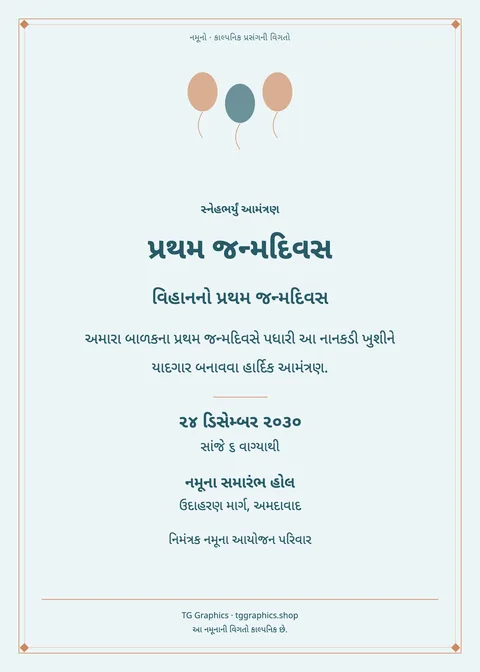
A first birthday marks a child’s first year and is often celebrated as a family milestone. The invitation can make the number one a gentle visual focus while keeping the child’s name and the hosts’ welcome central.
Download the sample PNG to inspect the card or share it as an example when discussing your design. Its names, dates and venue are fictional and must be replaced for a real event. For WhatsApp or email, send the final approved image with a short accompanying message containing a checked map link and a contact number. Sending an image as a file can help preserve detail when a messaging service would otherwise compress it.
For printed invitations, agree the physical size, paper and finishing requirements with the printer before the final artwork is prepared. The downloadable sample is a portrait image, not a production print file with bleed or crop marks. Ask for files suited to the actual printing job. Proofread names, dates, the year, AM/PM or Gujarati time wording, and the complete address in the final proof rather than checking only an earlier text draft.