
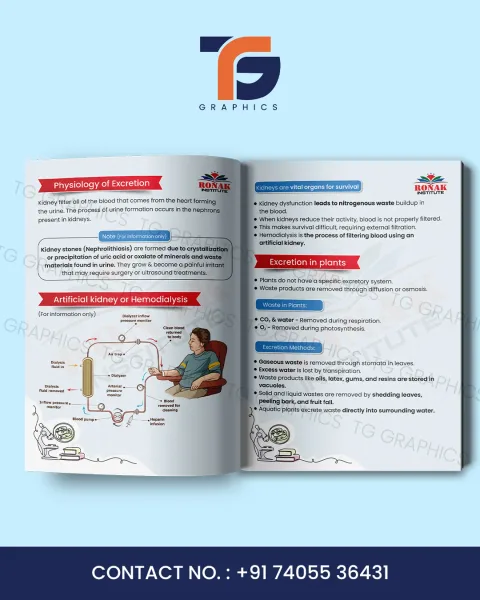
 View design ↗
TG GRAPHICS / DESIGN GALLERY
Editorial layouts
Educational publication spreads combining typography, diagrams and structured information.
3 designs · Click any design to enlarge
Educational editorial design
3 designs
View design ↗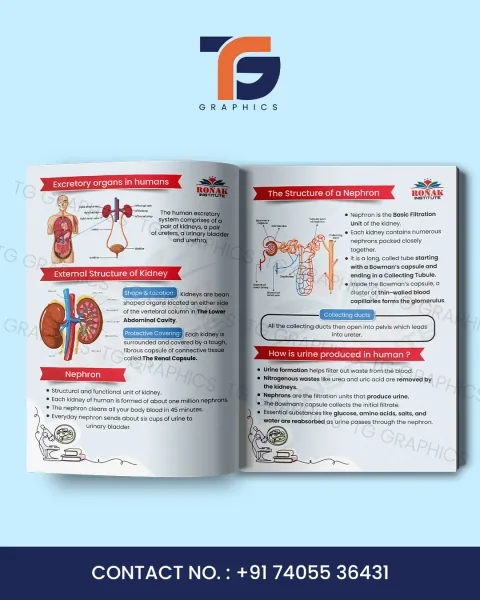 View design ↗
Biology editorial layout with diagrams and red headings
 View design ↗
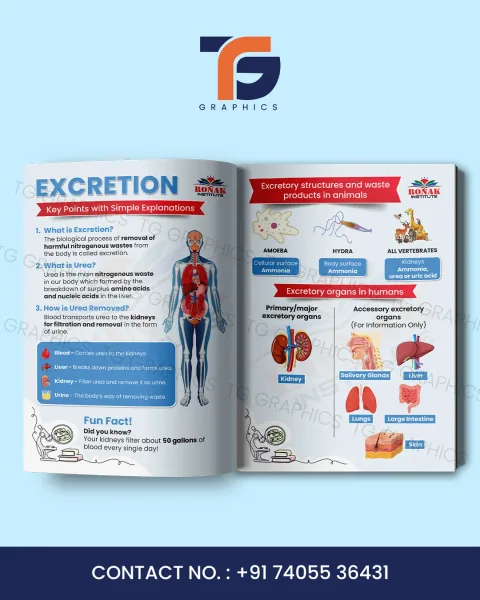
Excretion chapter editorial layout with anatomical diagrams
DESIGN GUIDE
Plan your design
Planning and purpose
An editorial layout turns a manuscript into pages that readers can follow. Start with the audience, page size and content structure. Educational material may include diagrams, tables, captions and several levels of headings. Provide the full text and image list so the page system can be planned around the actual material rather than a short sample alone.
Design and readability
Use a repeatable hierarchy for chapter titles, sections, captions and running text. Check complex tables and diagrams at reading size. Avoid forcing a fixed amount of text onto every page when it creates cramped spacing or separates a figure from its explanation.
Review the design at the size people will actually see it. Check names, numbers and spelling in every language, and leave enough space around important information. Ask for changes on the same proof so the final version reflects one agreed set of corrections.
Sharing and print preparation
Proof the complete page sequence, including contents, page numbers and cross-references. For a bound publication, check the inner margins and spread order with the printer. Discuss a separate digital PDF if links, navigation or screen reading are part of the brief.
Decide the final use before approving artwork. Digital sharing, a printed piece and a production file can need different exports. For printing, confirm dimensions, bleed, paper or material and finishing with the printer before the final file is prepared. Keep the approved version separate from earlier proofs.
Common questions
Can diagrams and tables follow the same style?
Yes. Share editable or clear source material where available. A consistent set of colours, labels, line weights and captions helps readers connect figures to the surrounding text.
When should the manuscript be final?
Provide an approved manuscript before full layout begins where possible. Later additions can change pagination, contents and figure positions, so identify any pending sections in the initial brief.
How do I request a personalised design?
Use the Contact us button and send your preferred gallery reference, approved content, language, size and deadline. The gallery helps explain your style preference. TG Graphics will discuss a personalised version and the files needed for your project.
How are price and delivery time decided?
Share the number of designs or pages, required formats, available artwork and deadline. Design scope, revisions, file preparation and printing requirements affect the work involved. Price and schedule are agreed for your project before work proceeds.
START YOUR PROJECT
Tell us what you need.
Share your preferred design, final text, format and deadline. We can discuss custom artwork, revisions and printing requirements.