Prepare respectful Gujarati invitations for prayer, devotional music, katha, yagna and temple events. Each event has its own wording, information checklist and sample, with space to describe the programme confirmed by the hosts.
Plan the invitation
Devotional invitations should identify the programme precisely. A recitation, a musical gathering and a multi-day katha are different experiences even when held at the same venue. Include the organiser’s name and the announced session times. Name a speaker, priest or musical group only after their participation has been confirmed, and copy approved titles carefully instead of adding honorifics from a generic template.
For longer programmes, show the opening date, closing date and daily timings separately. Mention aarti, prasad or a meal only if those arrangements are part of the actual invitation. Families and institutions may follow different traditions; an invitation explains the event, not a universal ritual prescription. A calm layout with an approved devotional motif leaves the venue and schedule easy to find.
Choose the event below to read its meaning, recommended information, Gujarati sample wording and answers to common questions. Each guide includes an original sample card with fictional details, an enlarged preview and a downloadable PNG. Use the sample to discuss the style you want; request a personalised invitation when your names and programme are ready.
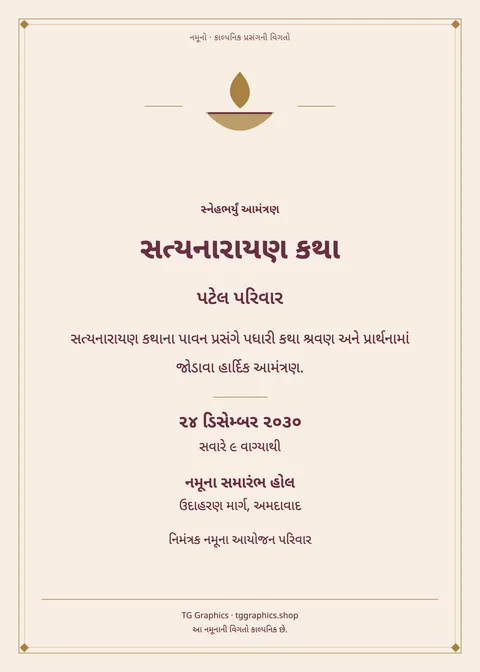
A Satyanarayan Katha invitation welcomes guests to a family or community devotional programme. It should identify the hosts, the katha session and the actual venue, with any aarti or prasad arrangements shown only when confirmed.
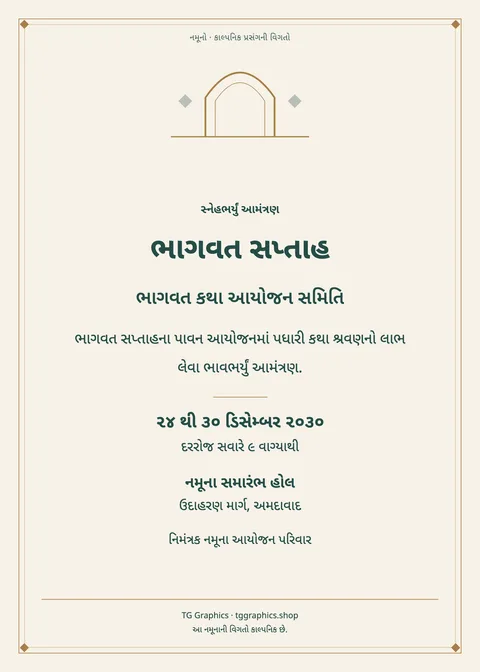
A Bhagwat Saptah invitation announces a multi-day Bhagwat katha programme. It needs more scheduling space than a single-session card, with opening and closing dates, daily session times and the confirmed speaker or organising institution.
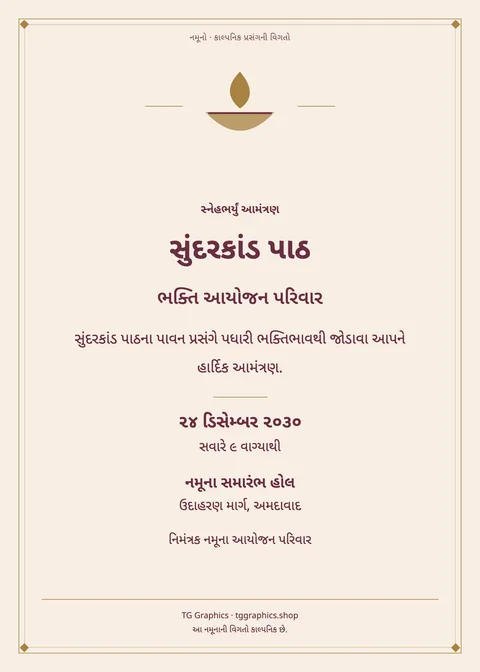
A Sundarkand invitation identifies a planned recitation gathering. Gujarati invitations can name the path clearly and give the start time, hosts and venue without requiring guests to infer the programme from a general religious heading.
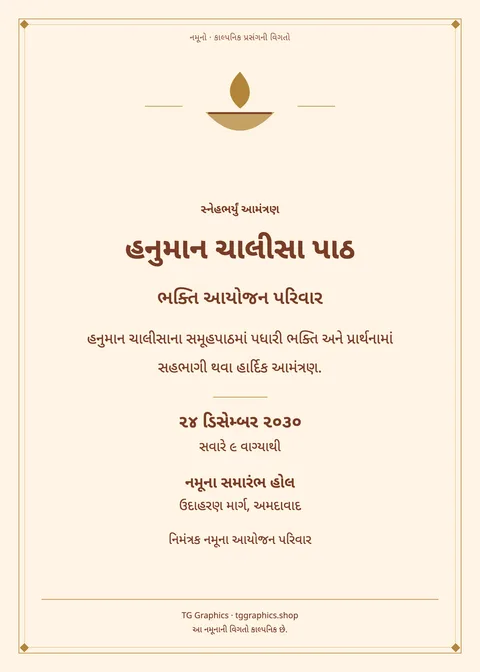
A Hanuman Chalisa invitation is for a scheduled recitation or devotional gathering. State whether it is a single session or part of a wider programme, rather than using a Hanuman Jayanti greeting as an incomplete event invitation.
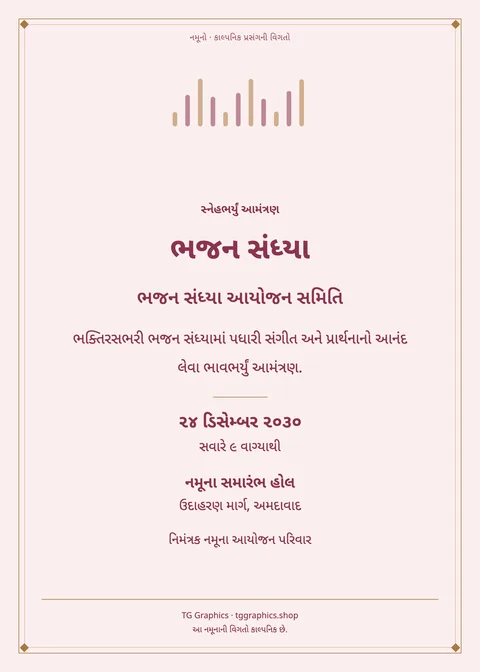
A Bhajan Sandhya card invites guests to an evening of devotional music. It should identify the musical gathering and its hosts, with the performers’ names included only when their participation has been confirmed by the organisers.
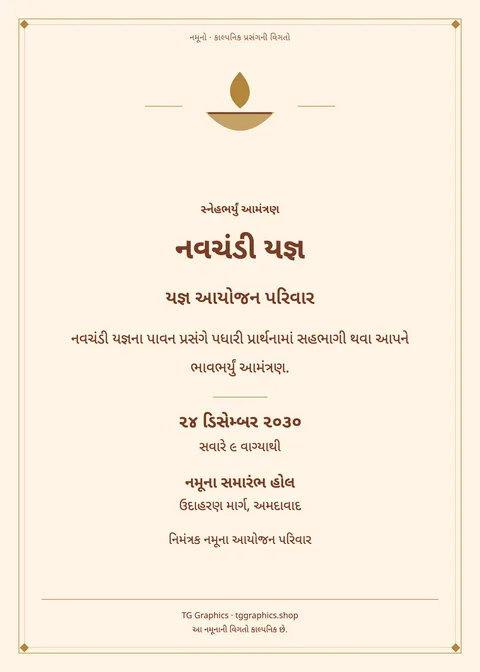
A Navchandi Yagna invitation announces the devotional programme organised by a family or institution. The ritual schedule should come from the organisers, with the invitation focusing on when and where guests are expected to attend.
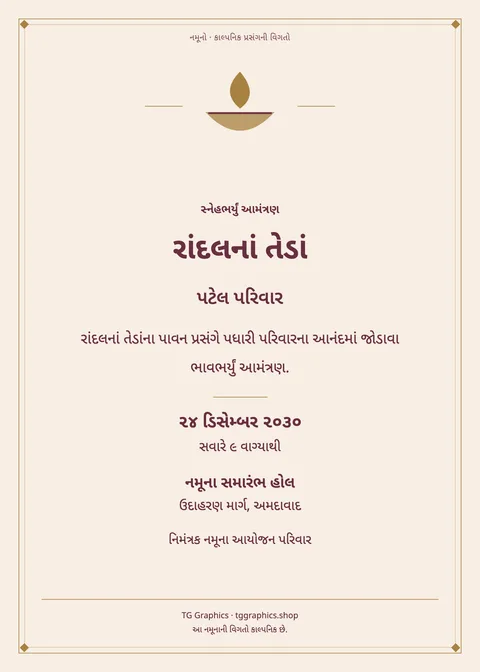
Randal Na Teda is a Gujarati family devotional occasion found in regional invitation collections. Families may follow different programmes, so an invitation should use their exact ceremony name and describe the confirmed gathering without generalising its practices.
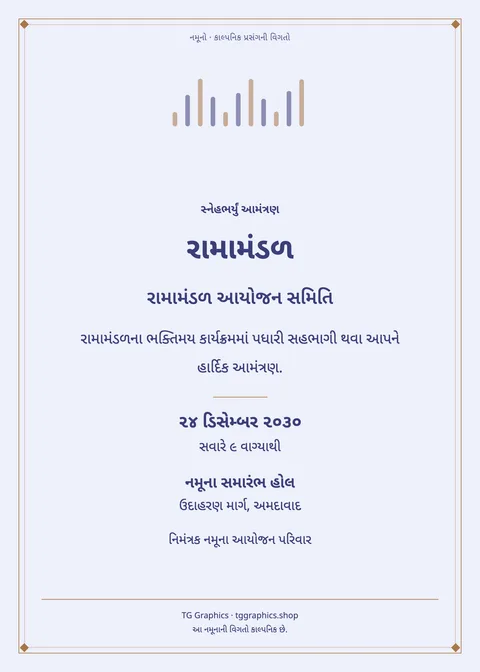
Ramamandal is a regional devotional programme represented in Gujarati invitation catalogues. Because organisers may use the name for a particular form of gathering, obtain their programme description instead of substituting a generic katha or bhajan invitation.
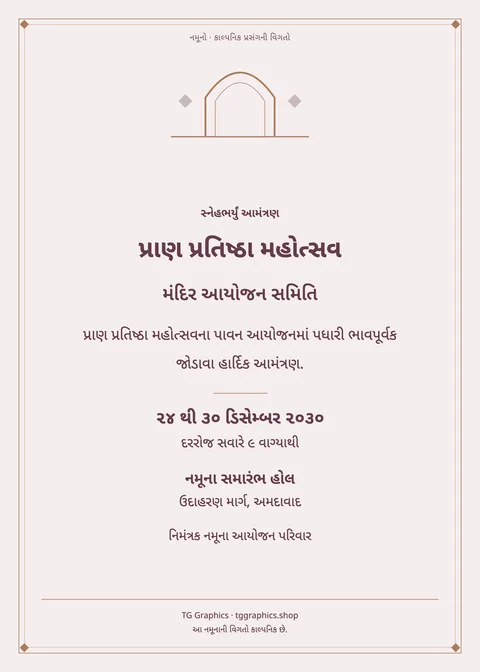
A Pran Pratishtha invitation announces a consecration programme organised for a temple or devotional institution. Such events may span several days and include distinct sessions, making a clear timetable and the organising body especially important.
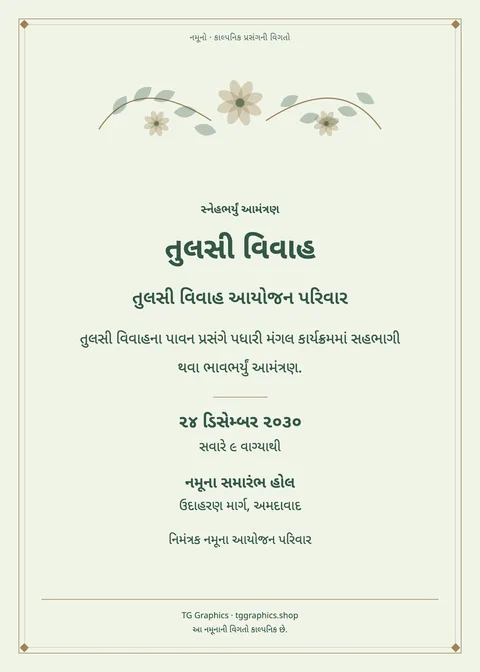
Tulsi Vivah is a devotional ceremonial wedding associated with Tulsi and Vishnu or Krishna traditions. Invitations can be issued by a household or temple. Use the hosts’ approved names and programme rather than treating it as a personal marriage card.
Download the sample PNG to inspect the card or share it as an example when discussing your design. Its names, dates and venue are fictional and must be replaced for a real event. For WhatsApp or email, send the final approved image with a short accompanying message containing a checked map link and a contact number. Sending an image as a file can help preserve detail when a messaging service would otherwise compress it.
For printed invitations, agree the physical size, paper and finishing requirements with the printer before the final artwork is prepared. The downloadable sample is a portrait image, not a production print file with bleed or crop marks. Ask for files suited to the actual printing job. Proofread names, dates, the year, AM/PM or Gujarati time wording, and the complete address in the final proof rather than checking only an earlier text draft.