Explore invitations for Jain ceremonies, Nikah and Walima, and Parsi Navjote. These occasions have distinct traditions; use the event’s own name, appropriate visual style and wording approved by the organising family or institution.
Plan the invitation
Community-specific cards should begin with the actual event rather than borrowing another ceremony’s language. Ask the organiser for approved names, titles, opening words and any symbol they wish to include. If a sample has an abstract decorative motif, it does not imply that a particular religious image is compulsory. A clear card can be respectful without combining symbols from unrelated traditions.
Public community programmes may include several sessions, different access arrangements or a separate meal. List only confirmed activities and distinguish the principal ceremony from supporting gatherings. For Jain fasting celebrations, use the organiser’s exact term for the observance and its completion. For any ceremony, the family or institution should check the final wording and programme before it is circulated.
Choose the event below to read its meaning, recommended information, Gujarati sample wording and answers to common questions. Each guide includes an original sample card with fictional details, an enlarged preview and a downloadable PNG. Use the sample to discuss the style you want; request a personalised invitation when your names and programme are ready.
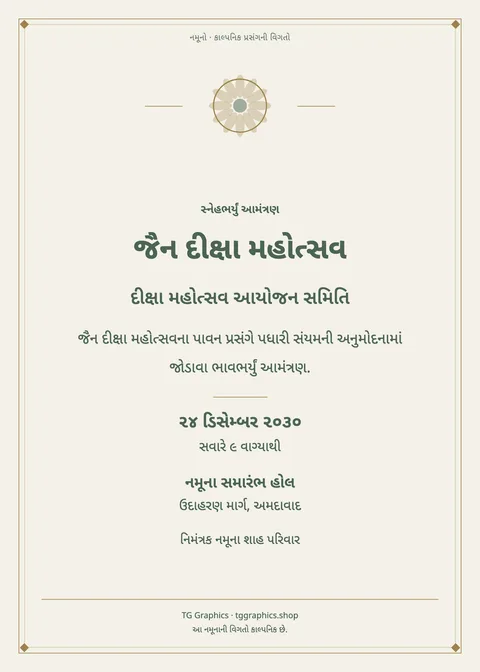
A Jain Diksha invitation announces a renunciation and initiation occasion within the organising community. Its names, titles and programme require particular care. The invitation should follow the institution’s approved wording instead of reusing a festive wedding message.
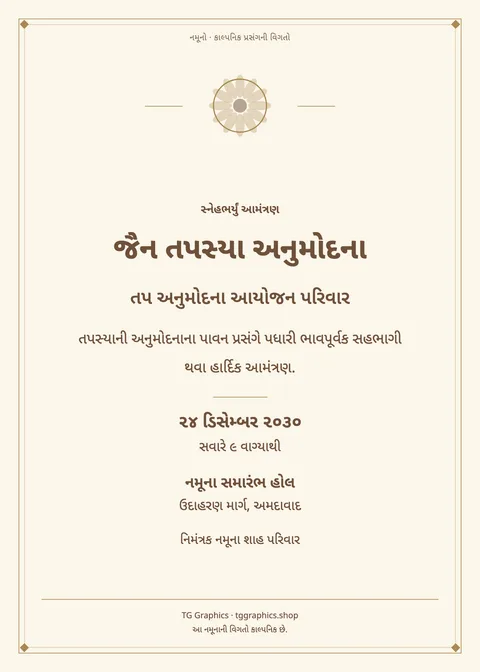
A Jain Tapasya invitation recognises an observance and welcomes guests to its announced celebration or anumodana. Tapasya is a broad category: the specific practice and its completion should be described using the organiser’s own confirmed terminology.
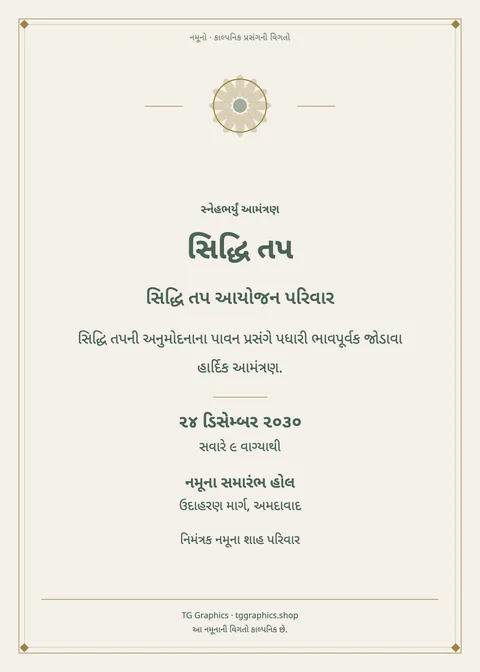
A Siddhi Tap invitation names a specific Jain observance and its associated gathering. It should not be treated as a generic fasting card: ask the organisers for the exact title, participants and programme they want to announce.
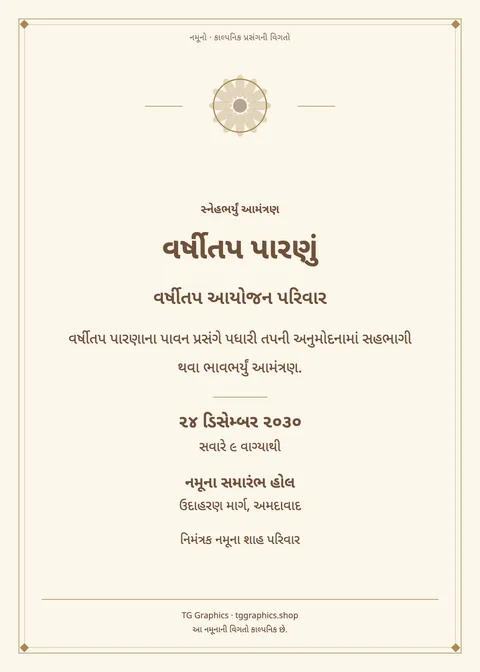
A Varshitap Parna invitation announces the completion gathering associated with Varshitap. The exact date, participants and arrangements belong to the organising family or institution. The card should name this occasion rather than a general religious meal.
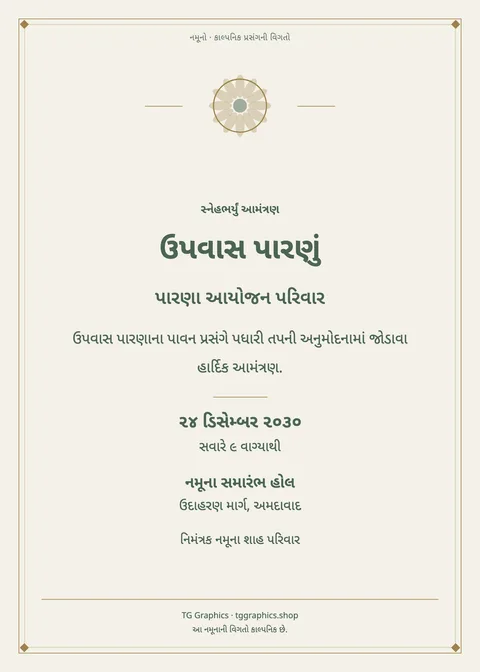
An Upvas Parna invitation identifies the gathering associated with completing a fast. Because different observances have different names and arrangements, the organisers should supply the exact title and attendance details for this particular event.
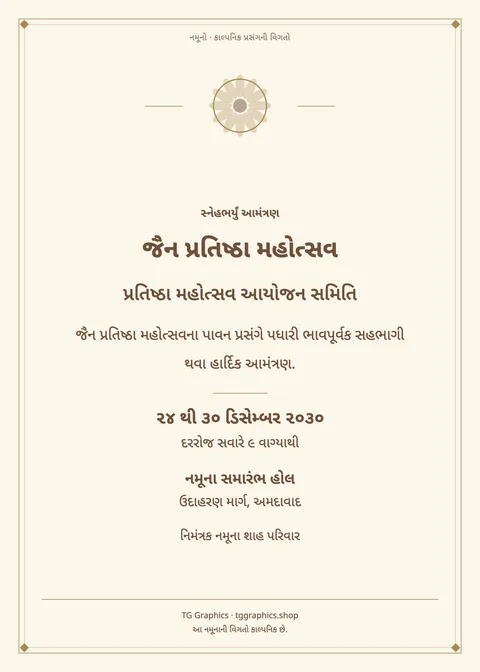
A Jain Pratishtha invitation announces a consecration programme organised by a Jain temple or community. Names of the temple, Tirthankaras and guiding figures should come directly from the organisers, with approved terminology for the particular tradition.
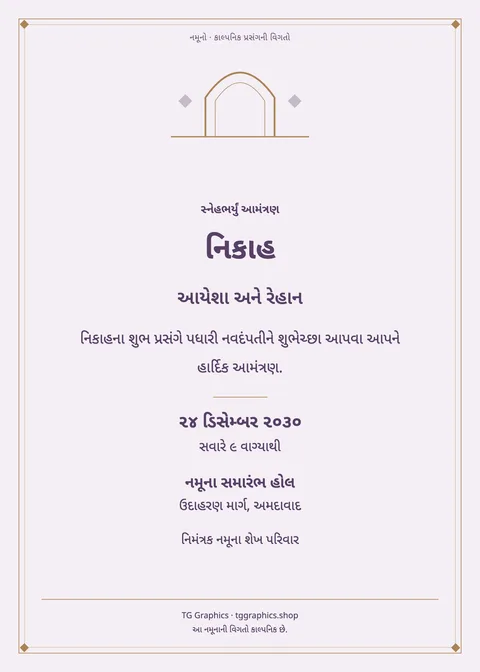
A Nikah invitation announces a Muslim marriage ceremony and welcomes the invited families and guests. Gujarati wording can make the invitation accessible to local relatives, while the family chooses the opening, names and approved religious expressions.
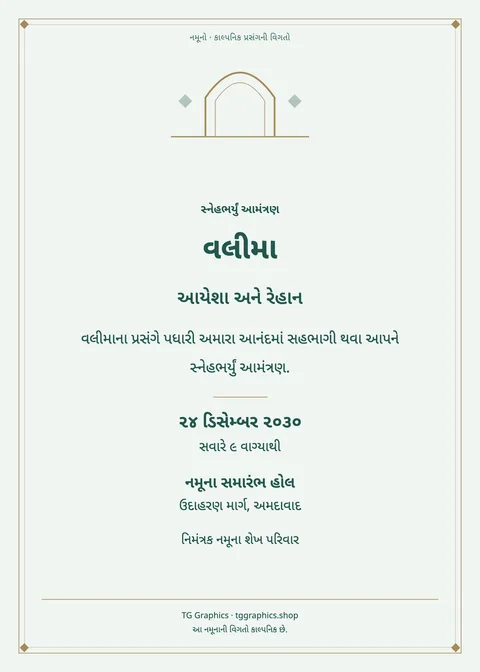
A Walima invitation welcomes guests to the marriage celebration or reception named by the hosting family. It may follow a separately invited Nikah, so its own date, venue and hosting details should be stated without relying on the earlier card.
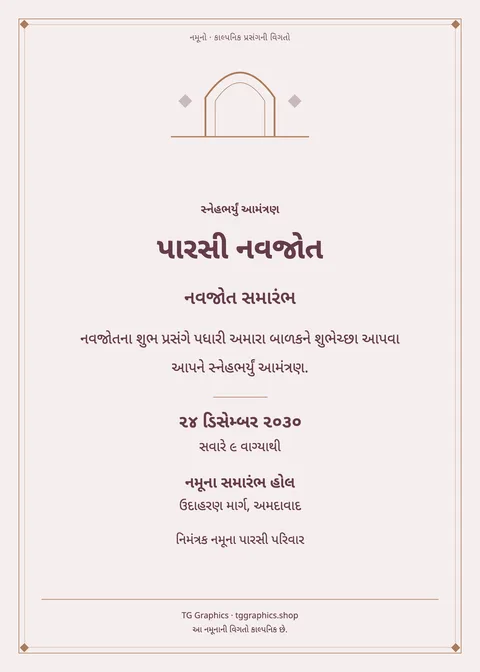
Navjote is a Parsi Zoroastrian initiation ceremony. Its invitation should name the child or participant and use wording approved by the family. It is a distinct tradition and should not be presented as a Janoi card with a changed heading.
Download the sample PNG to inspect the card or share it as an example when discussing your design. Its names, dates and venue are fictional and must be replaced for a real event. For WhatsApp or email, send the final approved image with a short accompanying message containing a checked map link and a contact number. Sending an image as a file can help preserve detail when a messaging service would otherwise compress it.
For printed invitations, agree the physical size, paper and finishing requirements with the printer before the final artwork is prepared. The downloadable sample is a portrait image, not a production print file with bleed or crop marks. Ask for files suited to the actual printing job. Proofread names, dates, the year, AM/PM or Gujarati time wording, and the complete address in the final proof rather than checking only an earlier text draft.