Plan the invitation
Distinguish the parna time from the arrival time for other guests. If there is a separate anumodana session or meal, show it separately. Use the organiser’s approved spelling and do not infer a date from an unverified calendar or the sample card.
Family and programme considerations
Community-specific cards should begin with the actual event rather than borrowing another ceremony’s language. Ask the organiser for approved names, titles, opening words and any symbol they wish to include. If a sample has an abstract decorative motif, it does not imply that a particular religious image is compulsory. A clear card can be respectful without combining symbols from unrelated traditions.
Public community programmes may include several sessions, different access arrangements or a separate meal. List only confirmed activities and distinguish the principal ceremony from supporting gatherings. For Jain fasting celebrations, use the organiser’s exact term for the observance and its completion. For any ceremony, the family or institution should check the final wording and programme before it is circulated.
Information to include
- Tapasvi names
- Confirmed parna time
- Anumodana and guest arrangements
- Approved names and Gujarati spellings
- Confirmed event date, with the year
- Guest arrival time and programme times
- Venue name, complete address and city
- A host contact and RSVP instructions, if needed
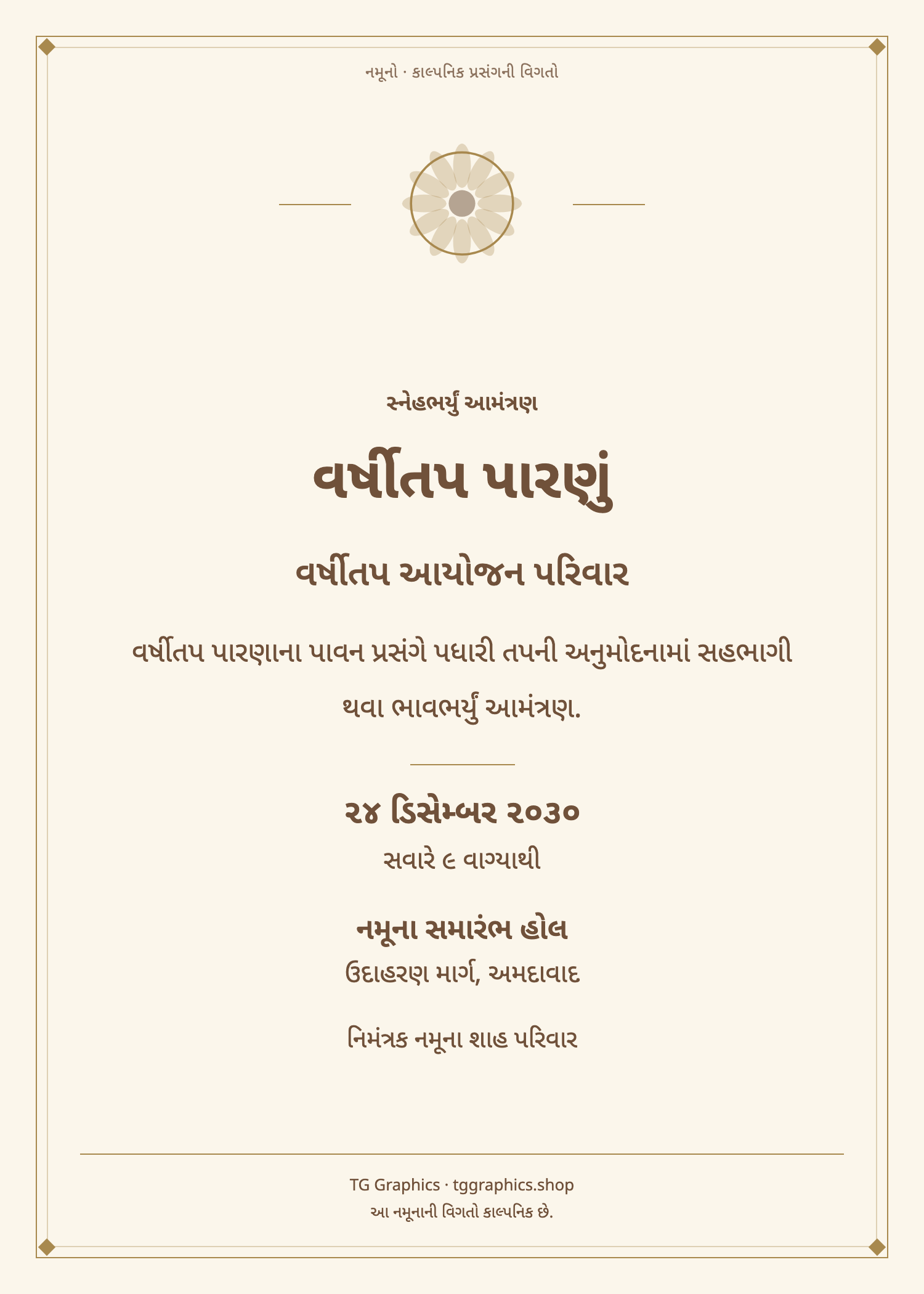
Sample card
Sample · fictional event details
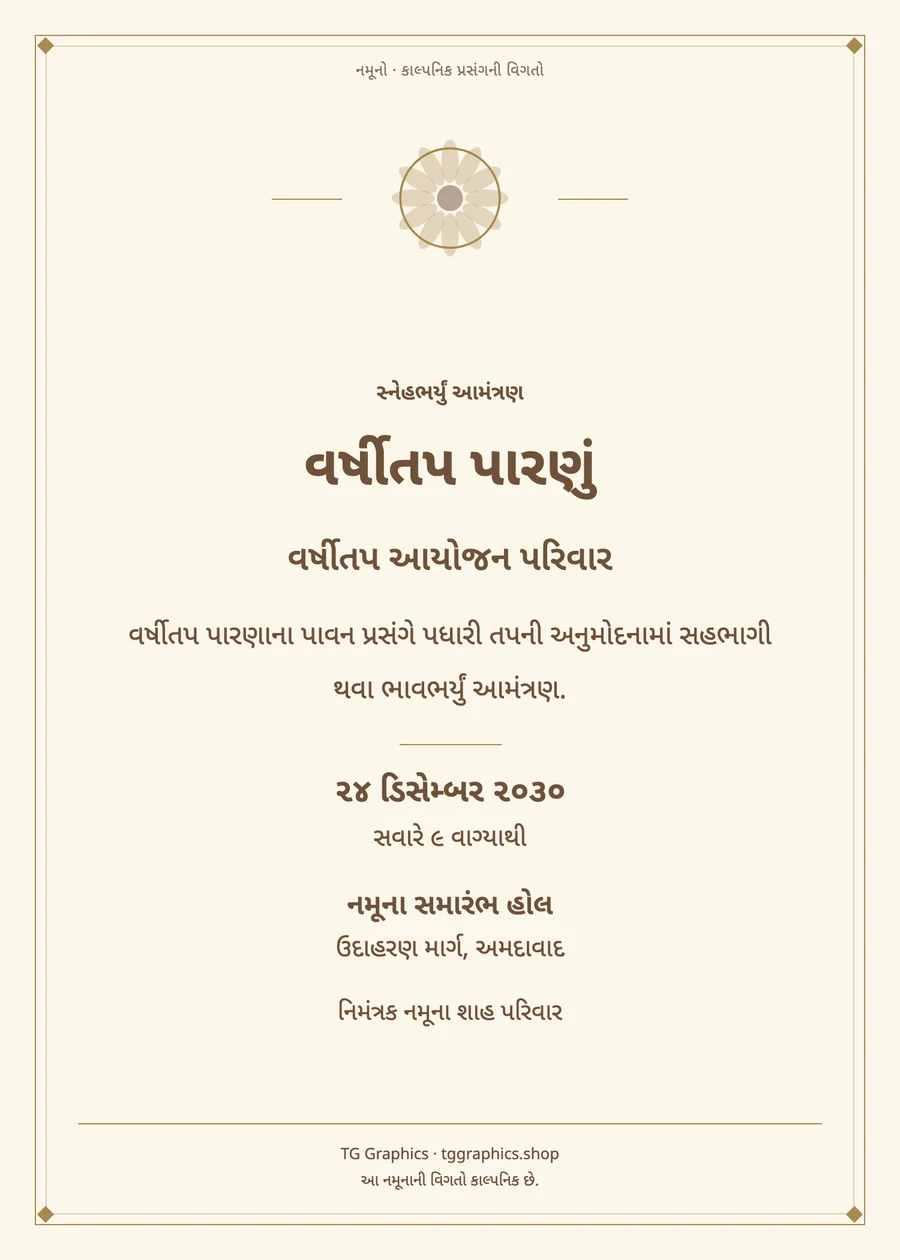
Gujarati sample wording
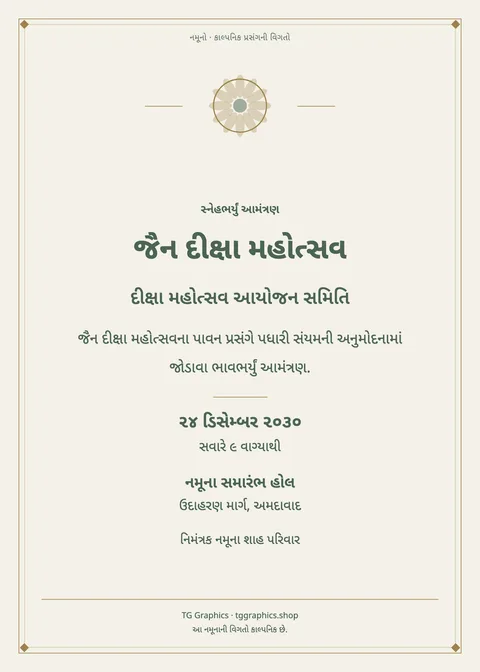
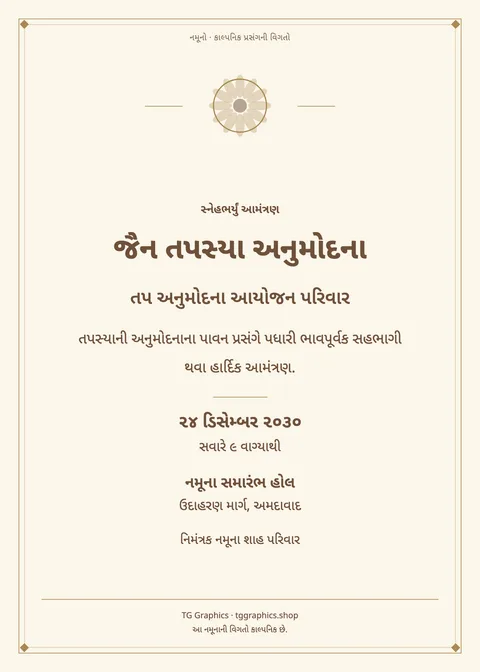
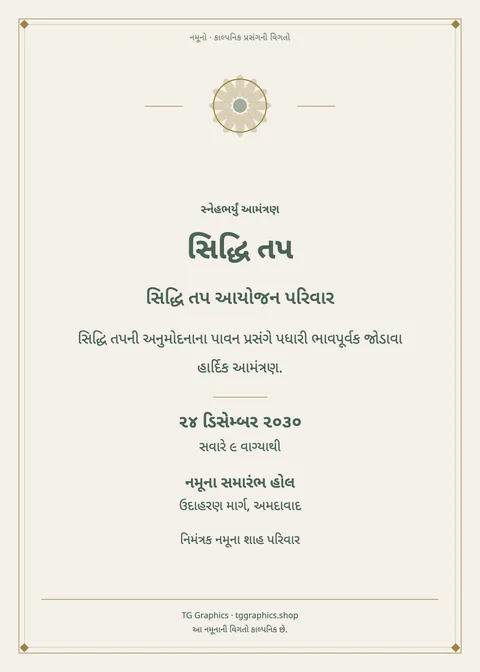
This is original example wording. Replace the sample names and event details before using it for your own invitation.
વર્ષીતપ પારણુંવર્ષીતપ આયોજન પરિવારવર્ષીતપ પારણાના પાવન પ્રસંગે પધારી તપની અનુમોદનામાં સહભાગી થવા ભાવભર્યું આમંત્રણ.૨૪ ડિસેમ્બર ૨૦૩૦ · સવારે ૯ વાગ્યાથીનમૂના સમારંભ હોલ · ઉદાહરણ માર્ગ, અમદાવાદનમૂના શાહ પરિવારનમૂનો · કાલ્પનિક વિગતોDesign and readability
Build the layout around the occasion name, the principal names and a clear date-and-venue block. Gujarati letters need comfortable line spacing, particularly when the card uses longer family names or a multiline address. Keep body text on a quiet background rather than placing it directly over a busy decorative pattern. Read the finished preview on a phone at its normal size; a card that looks attractive when enlarged may still be difficult to read in a message.
The sample on this page is an original illustration of one possible style, not a mandatory format. Choose decoration that suits the hosts and the occasion. A shorter family-approved message usually gives the card more space for practical details. If a photograph or logo is required, use a clear image with permission and review its crop before approving the final design.
Sharing and print preparation
Download the sample PNG to inspect the card or share it as an example when discussing your design. Its names, dates and venue are fictional and must be replaced for a real event. For WhatsApp or email, send the final approved image with a short accompanying message containing a checked map link and a contact number. Sending an image as a file can help preserve detail when a messaging service would otherwise compress it.
For printed invitations, agree the physical size, paper and finishing requirements with the printer before the final artwork is prepared. The downloadable sample is a portrait image, not a production print file with bleed or crop marks. Ask for files suited to the actual printing job. Proofread names, dates, the year, AM/PM or Gujarati time wording, and the complete address in the final proof rather than checking only an earlier text draft.
Frequently asked questions
What details are especially important for a Varshitap Parna invitation?
Start with tapasvi names, and confirm confirmed parna time. Also include anumodana and guest arrangements. Add the approved host names, exact venue and a practical contact. Check all of these in the final design, because a correct draft can still be copied into an outdated layout.
Can the Varshitap Parna wording be adapted to our family?
Yes. Use the sample as a starting point and ask the hosting family or organising institution to approve the event name, opening words and programme. Local terms, family customs and the people being invited can differ. Keep only confirmed activities, and do not assume that every tradition follows the same ritual order or uses the same imagery.
Is the sample editable or ready to use for my event?
This page provides an enlarged preview and a downloadable sample image. It does not open a personalised editor, and the fictional event details are not your invitation. Send your approved information to TG Graphics to discuss a custom version. You can request different names, wording, colours and layout, with the final scope agreed before the design is prepared.
How should we check the Gujarati before sharing?
Ask someone familiar with the family names and the occasion to read the final card aloud. Check spellings, relationships, venue names and date labels, then compare the programme with the organiser’s latest schedule. Review the image at phone size and confirm that no letters, lines or contact details are clipped. For print, also check a proof at the intended physical size.